Guide
What is wasted wind?
The short answer
It’s wind power that could have been generated but was switched off, because the network couldn’t carry it to where it was needed. NESO pays wind farms to stop, and often pays gas power stations further south to start. It isn’t a warning, and there’s nothing for you to do.
Why it happens
Much of Britain’s wind power is in Scotland, and much of its demand is further south. On a windy day there can be more power in Scotland than the lines to England can carry. NESO then pays some wind farms to reduce their output, and pays other generators, often gas power stations, to make up the difference south of the bottleneck.
The wind farms aren’t at fault. The wind was there, and the wires weren’t.
How much?
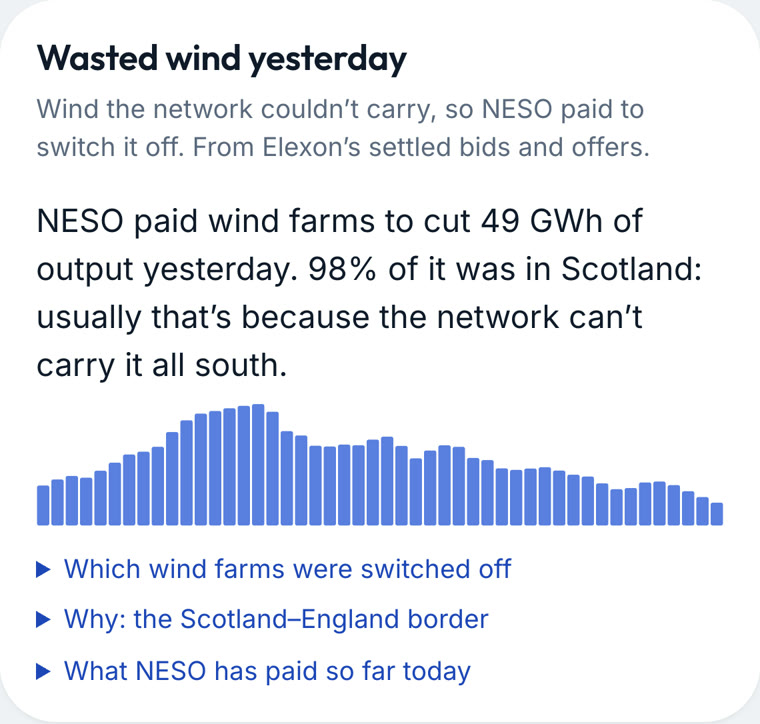
On 30 October 2026, wind farms were paid to cut about 49 GWh of output, and 98% of it was in Scotland (our figures, from Elexon’s data).
The yearly bill is far larger. Octopus Energy’s Wasted Wind tracker reports over £1.5bn so far in 2026, counting both turning wind down and replacing it. That’s a different measure from ours, and Grid Alert isn’t connected with Octopus.
See it for yourself
The Wasted wind card in Grid Alert shows how much was switched off, half hour by half hour, on any day it matters. It’s free. Grid Alert Plus adds which wind farms were switched off and which stations were paid.
Be the first to know
Grid Alert turns NESO’s official warnings into one clear status for your home. It’s coming this winter, free on Android and iPhone.
Email when live